The Invisible Colony
Year : 2022
Thesis Advisor: Toshiko Mori
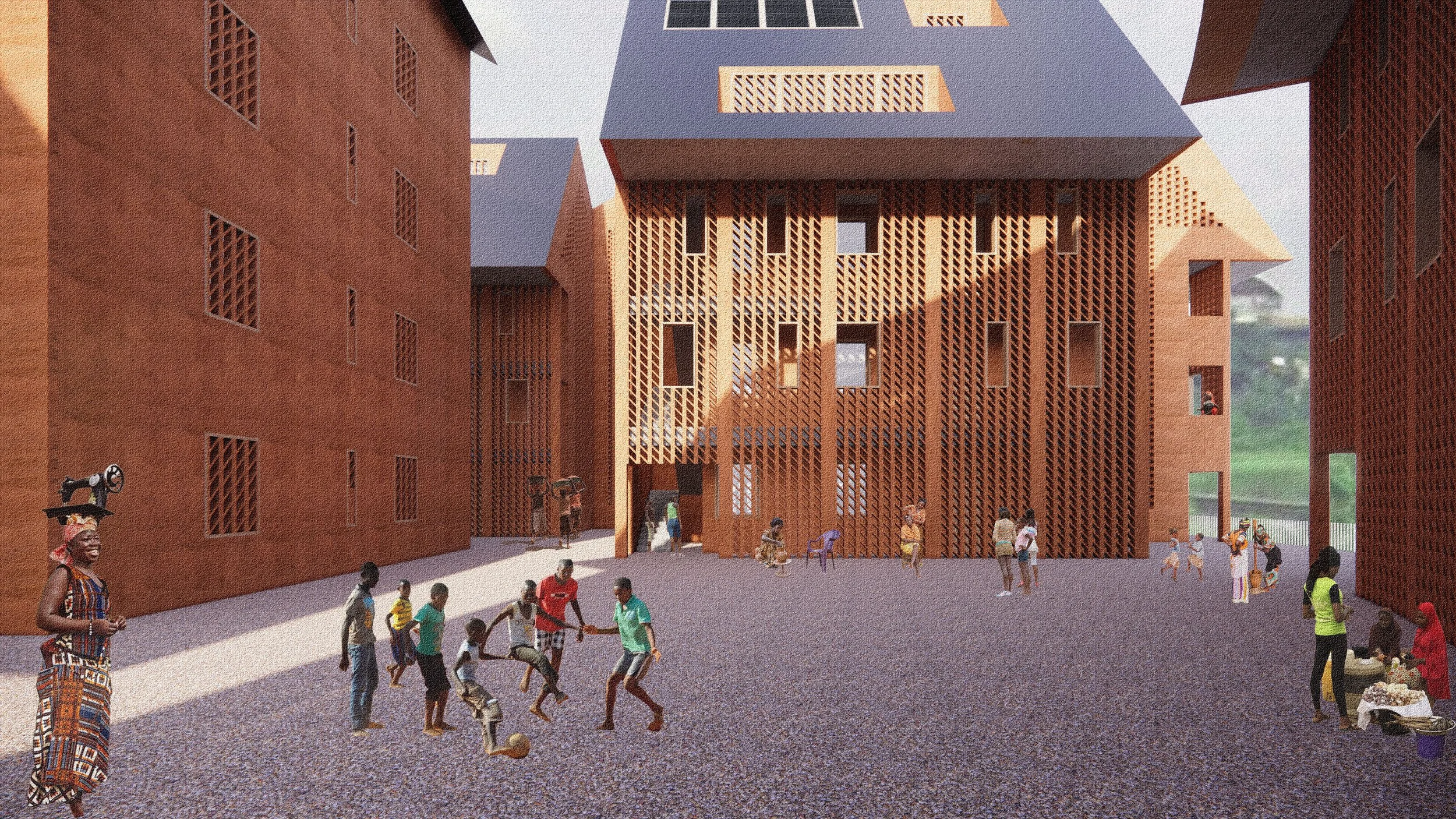
The Invisible Colony is a housing project that addresses the “cultural rupture” caused by the violent theft of Nigerian artifacts during the colonial era and the modern displacement of local artisans. While historic artifacts sit in museums abroad, the living craftspeople of the past, present, and future are losing their rights to the city due to rapid urbanization. This project seeks to render visible what Lagos has rendered invisible, rerooting place, craft, and community.
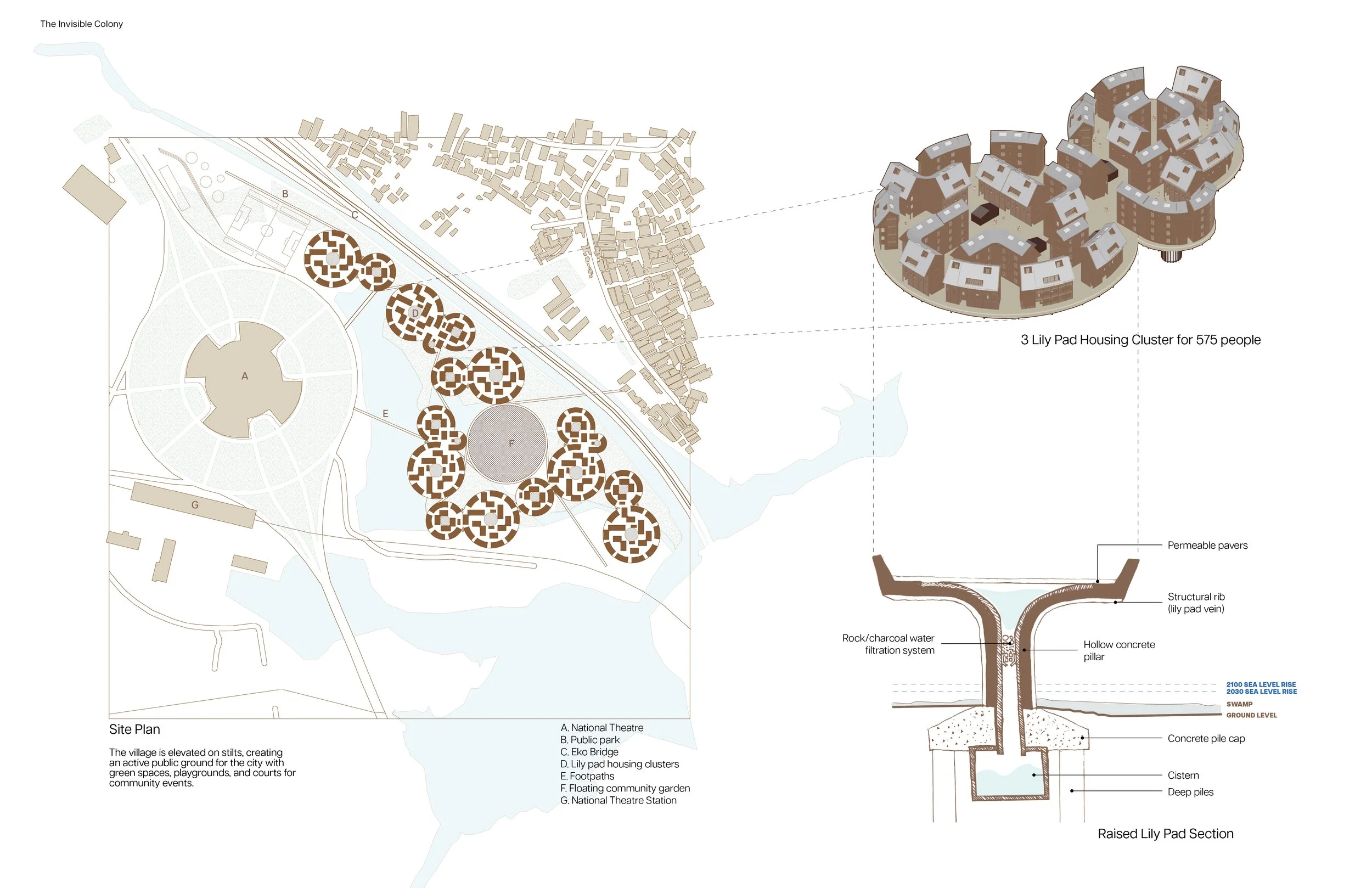
Situated on a wetland in Iganmu, Surulere, the design is inspired by Lagos lily pads to navigate rising sea levels and annual flooding. The village is elevated on stilts, creating a public ground for the city and a semi-private network above. These “lily pads” mimic nature to filter rainwater into cisterns, while housing structures utilize solar panels to ensure decentralized power.
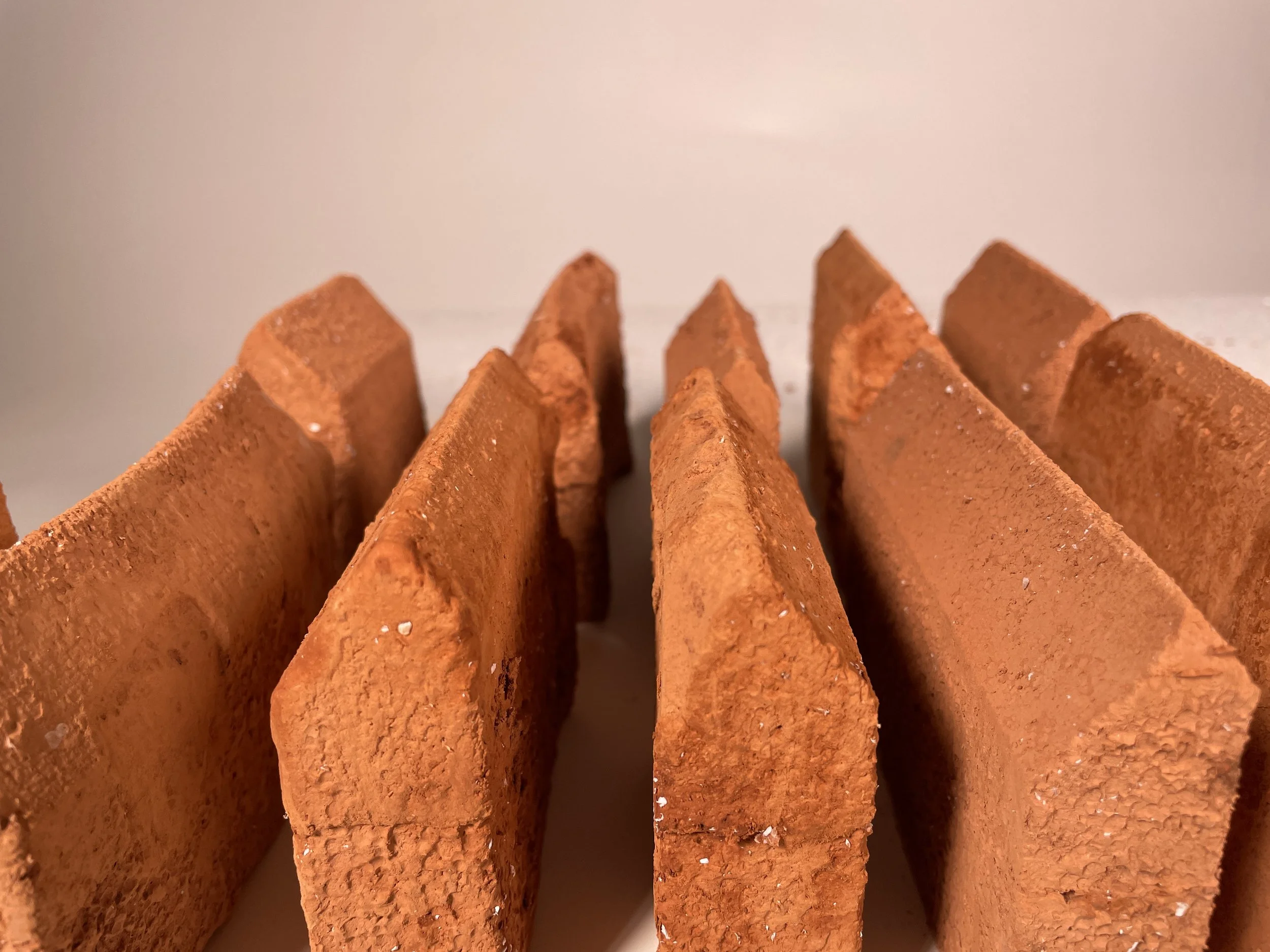
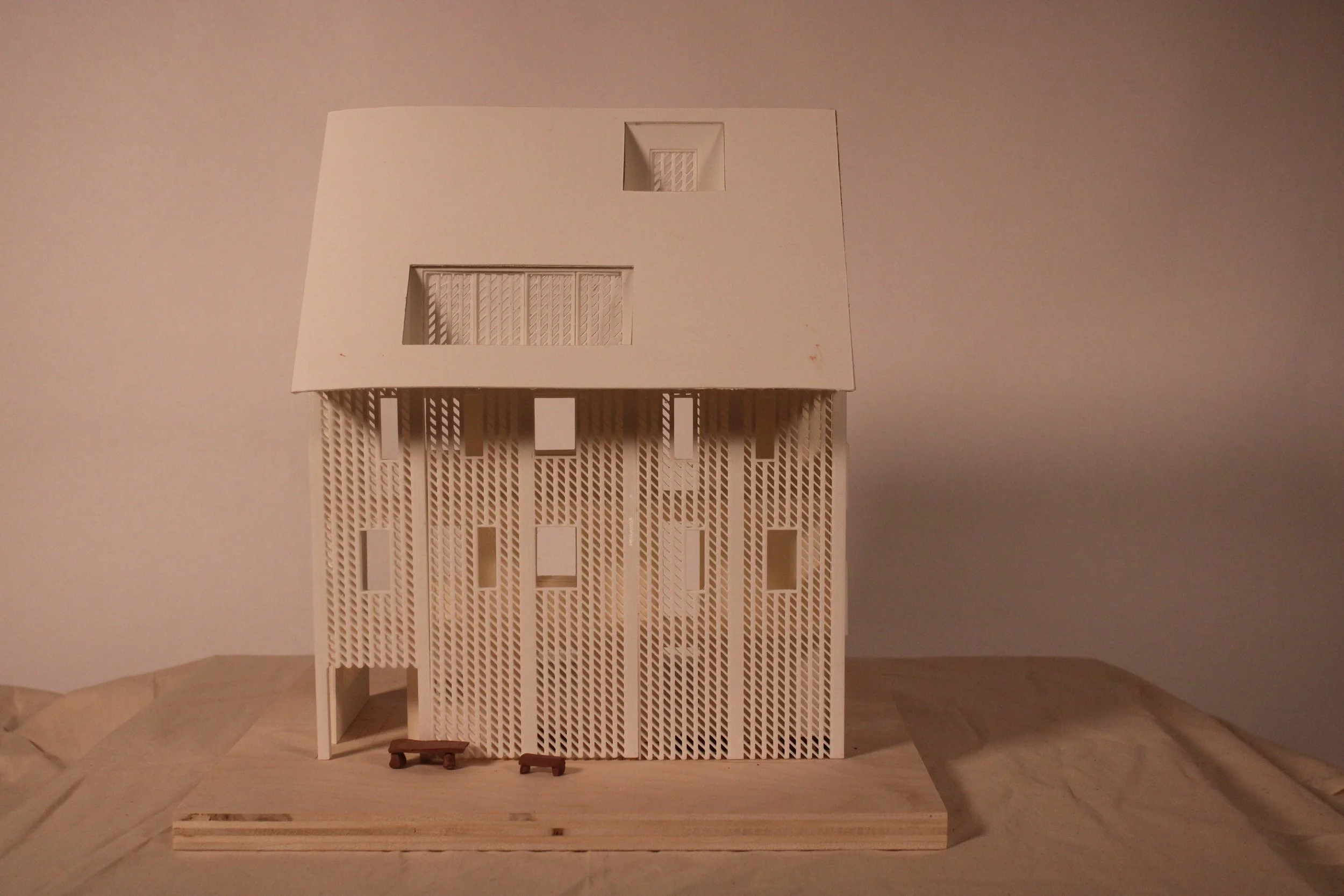
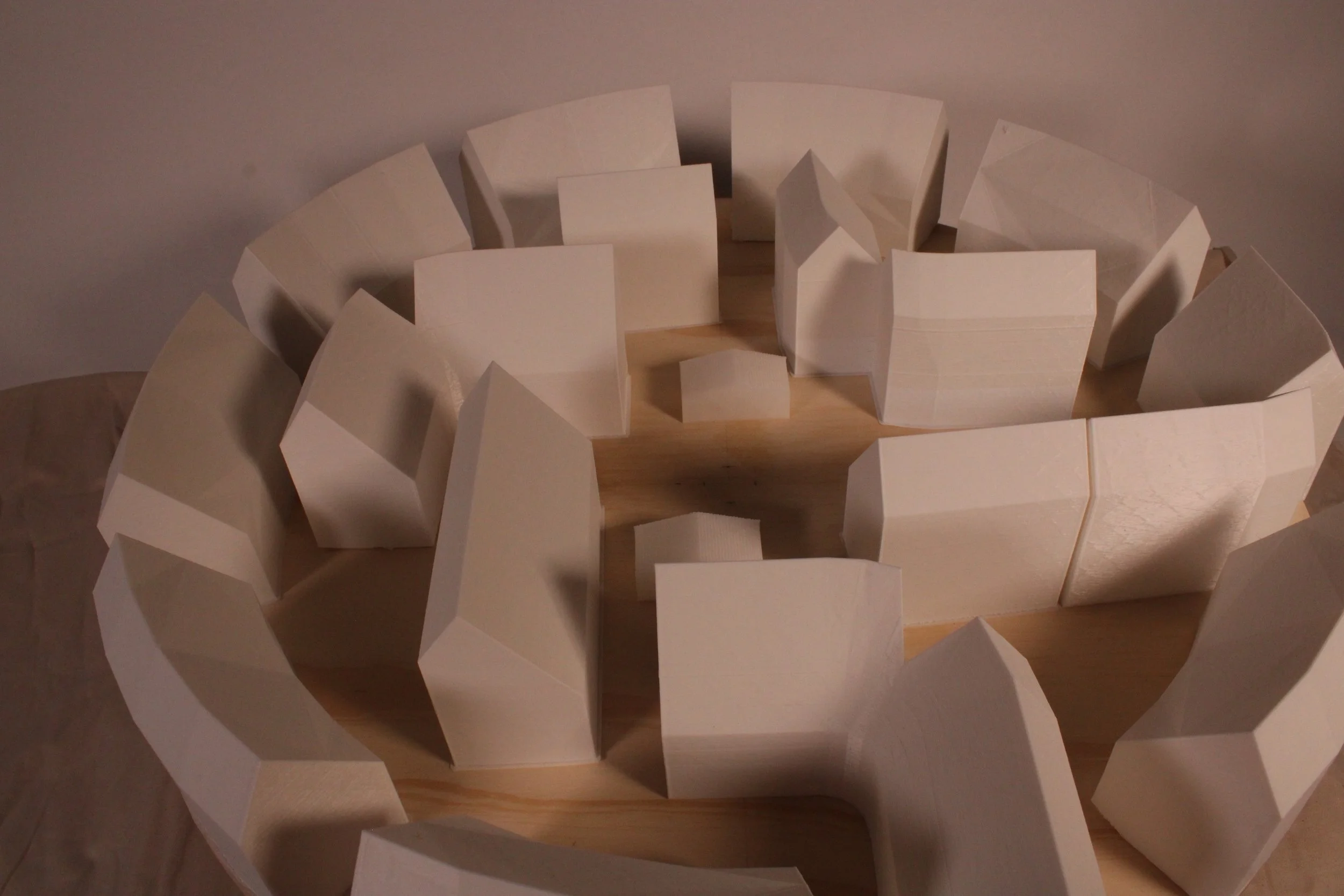
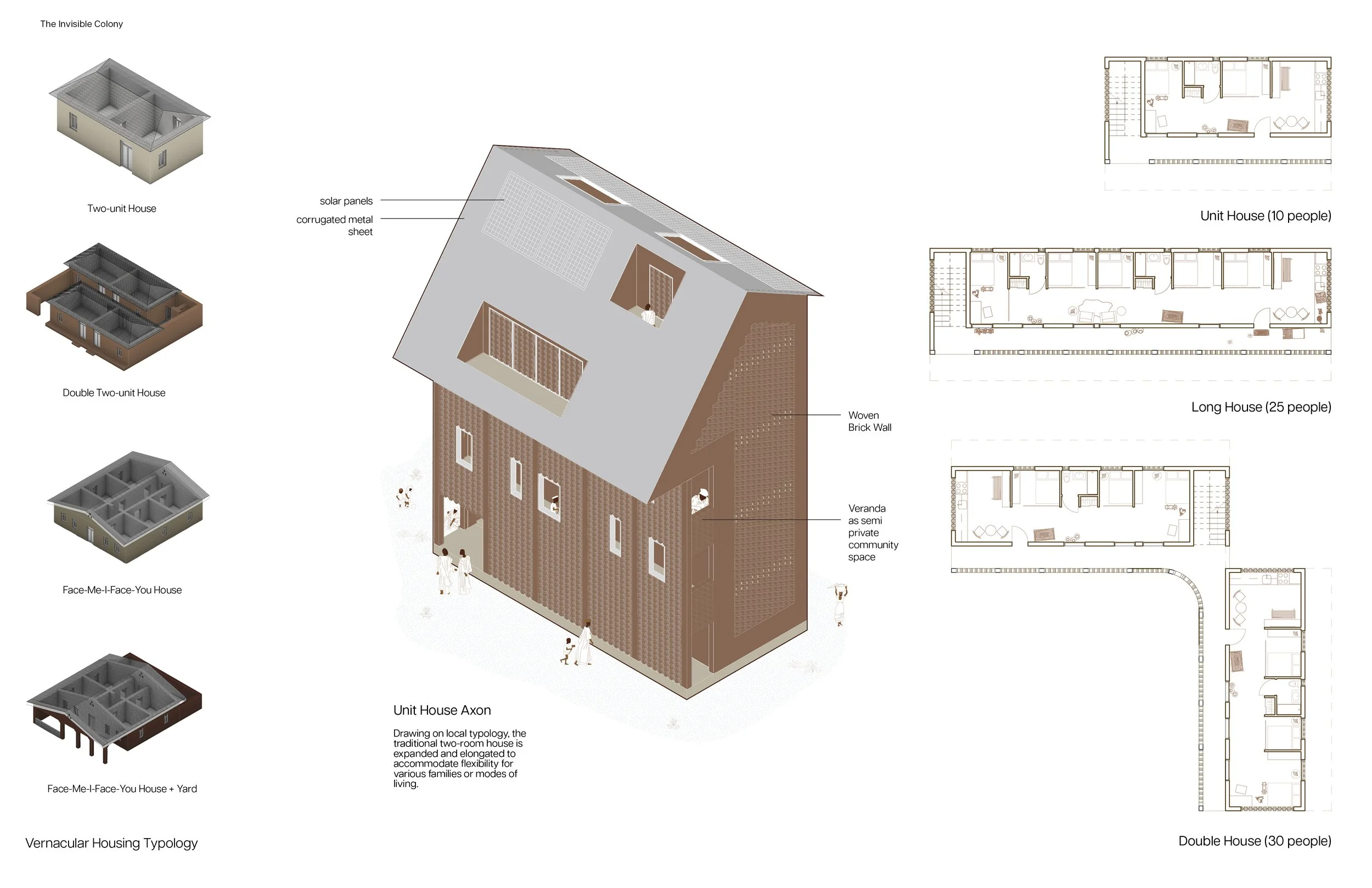
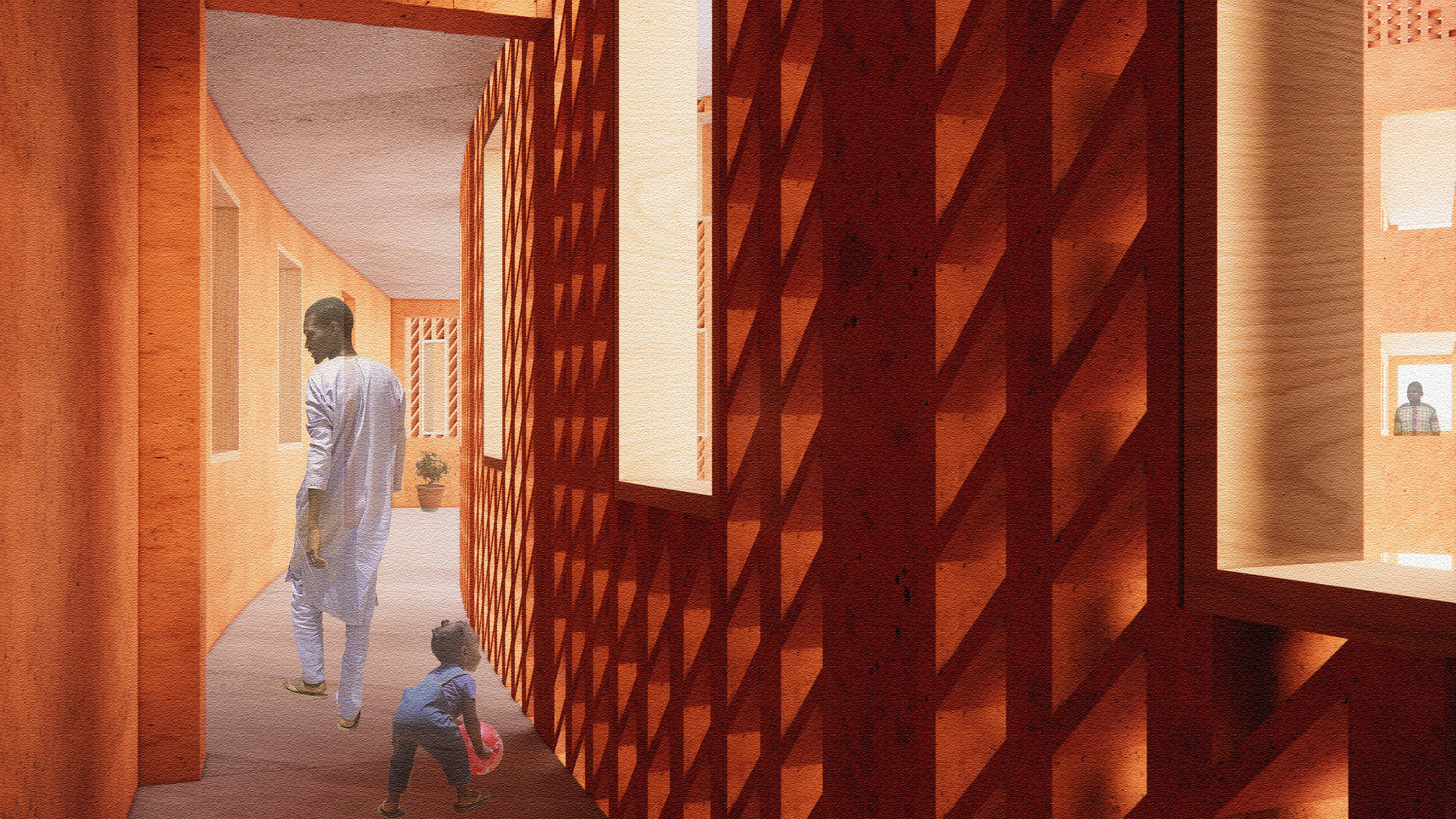
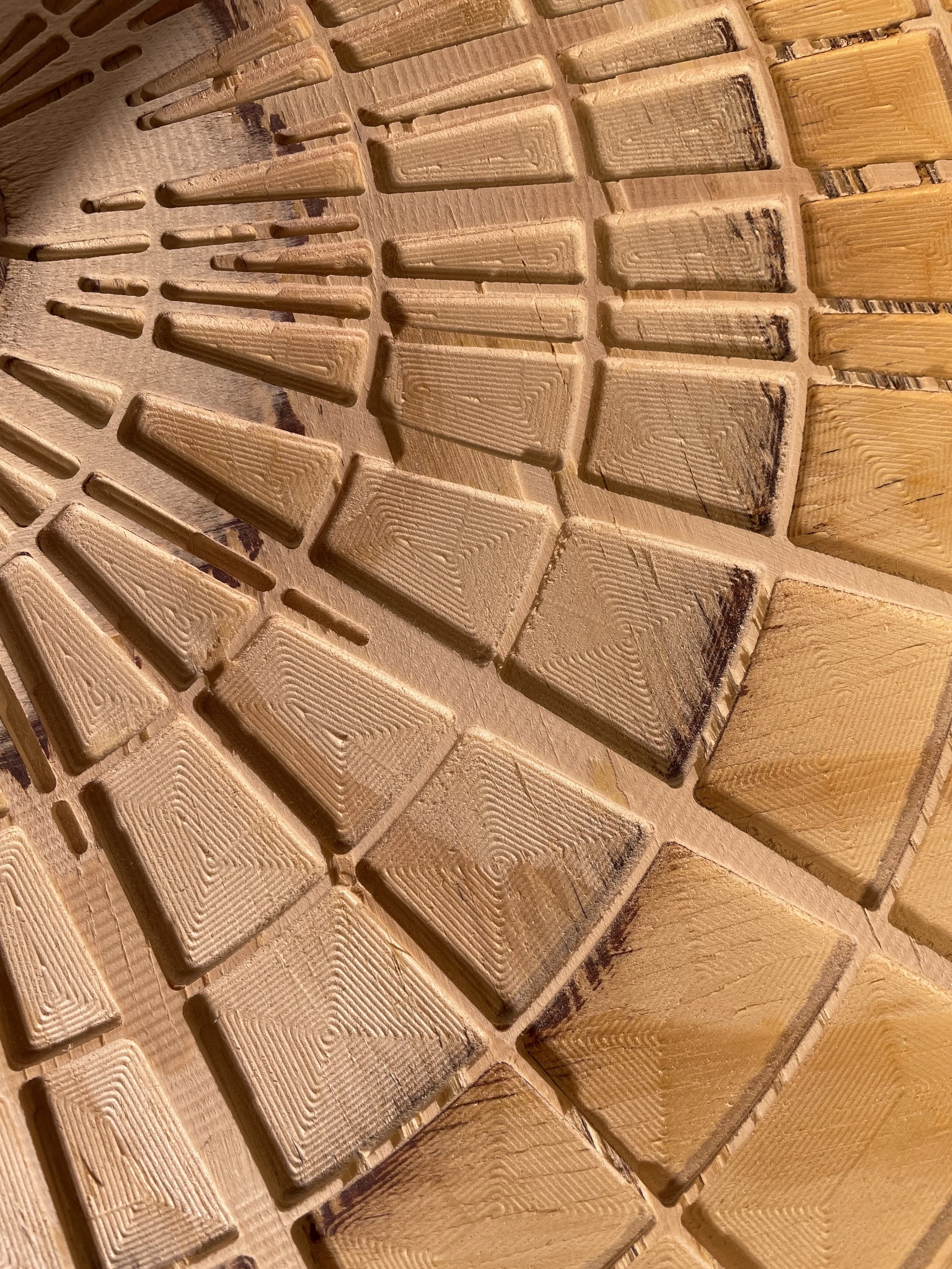
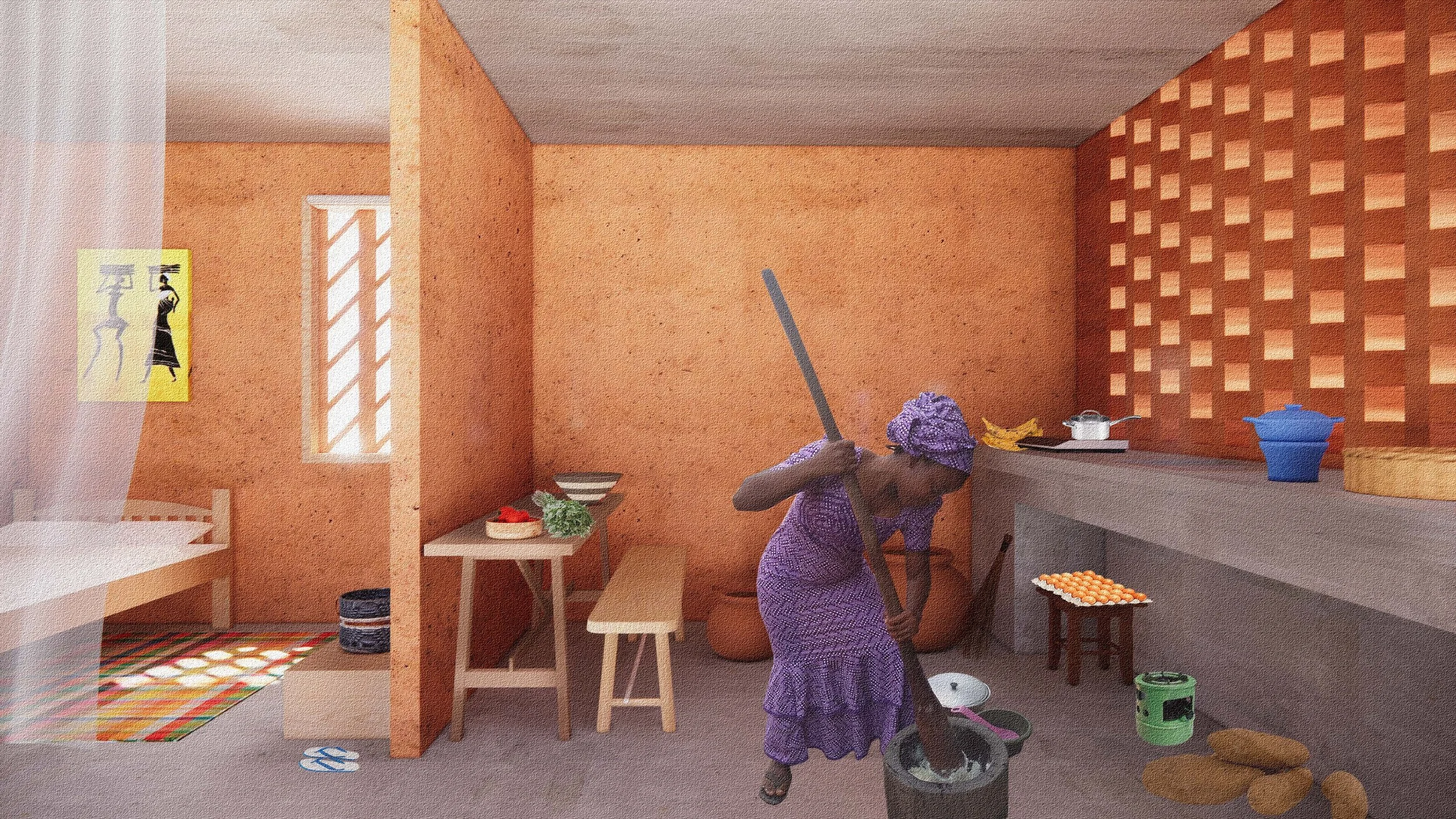
The project utilizes z-shaped bricks made from locally sourced laterite. Laid in various patterns to create a perforated façade that lets in light and air. The housing units, based on traditional typologies like the two-room house, aggregate into compounds filtered with pedestrian paths and shared amenities.
By reclaiming space for 3,500 residents, the project returns agency to the dweller, allowing craft to become a dynamic performance for community engagement. Ultimately, The Invisible Colony constructs a new form of public memory, imagining a future where indigenous knowledge is transferred between generations and craft is again openly practiced in the heart of the metropolitan city.